

Shimla Ropeway Project: Is the ₹2,980 Crore Plan Really Back on the Table?
Anyone who’s crawled through Shimla, Himachal Pradesh on a busy weekend knows why the Shimla ropeway project keeps coming back. The idea is a 13.65-km aerial network that lifts tourists and commuters off the roads. This year’s reality has been messier. The Cabinet scrapped the tender in May over runaway costs, then July brought word of a retender. So which is it? Short answer: partly. If you’re eyeing a hill-town purchase meanwhile, our earlier piece on REALTORSBUZZ covers the buying side.
What the Shimla ropeway project actually involves
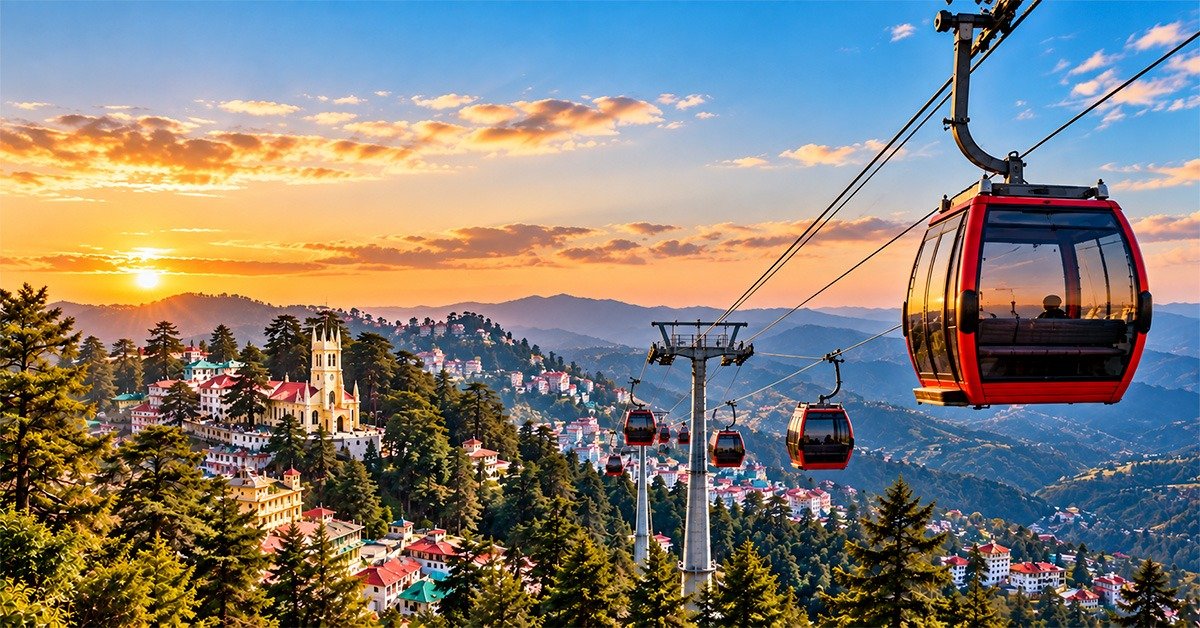
The Shimla ropeway project is a proposed urban aerial ropeway that would be the world’s second-largest, behind La Paz in Bolivia.
The route and capacity
Think 660 cabins, ten people apiece, one rolling in every two to three minutes. That adds up to 3,000 passengers an hour each way, across about a dozen stops, from Tara Devi through the ISBT and the railway station to Sanjauli, IGMC and the Ice Skating Rink.
Why Shimla wants it
Congestion, plain and simple. Deputy Chief Minister Mukesh Agnihotri, who holds the Transport portfolio, calls it an “eco-friendly transport solution” that’d trim traffic, emissions and roadside parking in the capital.
A start date that slipped
Back in 2024, construction was pencilled in for 1 March 2025. We’re now in September 2026 and there’s no live tender.
How the Shimla ropeway project’s cost climbed 72 per cent
Here’s the number that changed everything: the estimate went from ₹1,734 crore to ₹2,100 crore, then to ₹2,980 crore. That’s about 72 per cent higher, or ₹1,246 crore on top of the original.
Where the extra money went
The government blames the West Asia crisis, which raised construction costs and tangled supply chains. Whatever the cause, the state feels it. Costs were meant to be shared 80:20, with the New Development Bank lending most of it, so Himachal’s own share jumped from ₹388 crore to ₹540 crore, according to The Tribune’s report on the scrapped tender. That’s money the state was already struggling to find, per The Tribune’s earlier reporting on its fiscal stress.
One bidder, three rounds
And the bids? Three rounds of global tendering drew a single bid. The Centre let the state proceed with it, but one bidder on a ₹2,980 crore job isn’t exactly a vote of confidence.
What PPP mode means for the Shimla ropeway project
Public-private partnership (PPP mode) means a private company finances, builds and runs the ropeway on a long concession, so the state doesn’t shoulder most of the bill.
What the Chief Minister told the Assembly
On 3 September, Chief Minister Sukhvinder Singh Sukhu told the Assembly the state wants ropeways built through PPP and externally aided models, with concessions of 30 to 35 years on the table. On Shimla specifically, he said the proposal couldn’t proceed once the tender assessment landed near ₹2,700 crore. He didn’t sugarcoat the track record either: ropeways often get proposed to chase subsidies and then sit stalled, and a few run nearly empty while upkeep costs pile up. The state hasn’t given up on the idea, though. Cost is the sticking point. Industries Minister Harshwardhan Chauhan noted six PPP ropeways are already underway elsewhere in Himachal.
So is it really back on the table?
Sort of. In July, Agnihotri said a retender would go to Cabinet, and he wants more Central money to make the numbers work. The Chief Minister’s September comments point somewhere else, toward private capital rather than a state-led rebuild. Two things to watch: what Cabinet decides on the retender terms, and whether the Centre coughs up extra funding. Until then it’s a proposal. Nothing more.
What the Shimla, Himachal Pradesh ropeway means for visitors and buyers
For anyone planning a trip, the ropeway changes nothing right now, because nothing’s being built.
If you’re visiting
Plan around the roads and parking you know. The original pitch had visitors leaving their cars at an entry point like Tara Devi and riding in. Nice idea. Not happening soon.
If you’re a second-home buyer
Don’t pay extra for “ropeway proximity”. We haven’t seen any official estimate of how it would affect property values near the stations, and there’s no approved contractor. Ask any agent making that pitch to show you the Cabinet decision; a glossy brochure won’t do. If you’d rather test the hills without committing to a whole house, co-ownership is one route, and BRIKitt focuses on Chail, Kufri and Shimla. The next Cabinet meeting is the signal worth watching.