

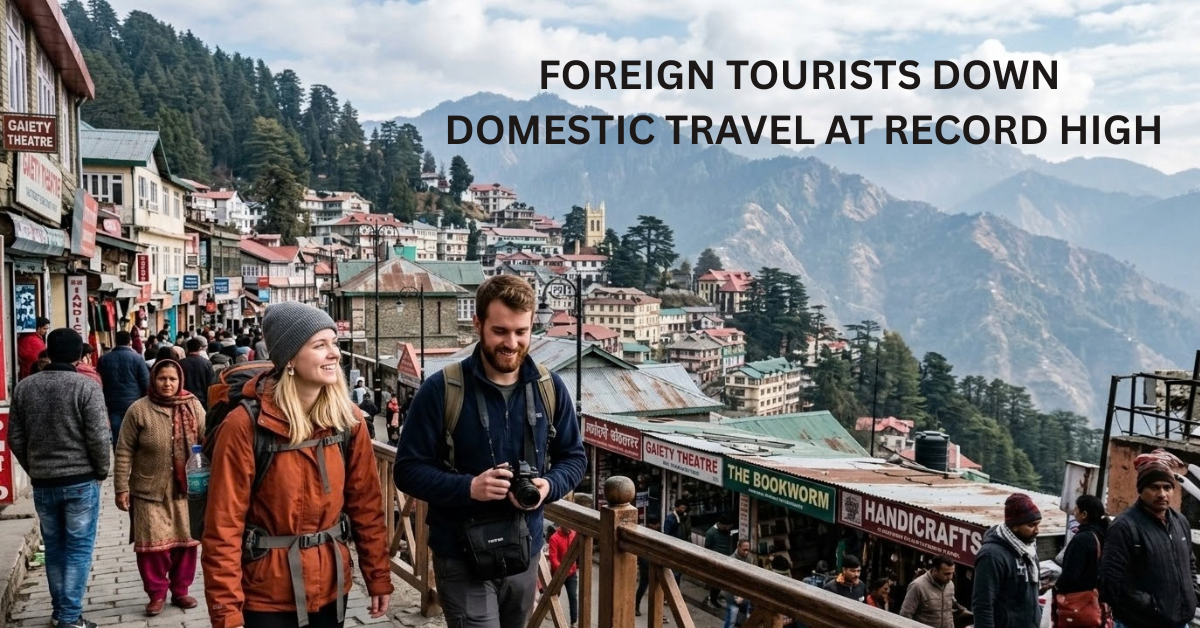
Foreign Tourist Arrivals in India Are Falling Even as Domestic Tourism Booms
Foreign tourist arrivals in India are declining for the second straight year — even as domestic tourism in India just crossed 303 crore visits. That’s not a contradiction; it’s the defining story of India’s tourism indForeign tourist arrivals in India are declining for the second straight year. Meanwhile, domestic tourism in India just crossed 303 crore visits. That’s not a contradiction. In fact, it’s the defining story of India’s tourism industry in 2026.
For two decades, India has pitched itself as a global travel destination. This year, however, the numbers landing on the Ministry of Tourism’s desk make for uncomfortable reading. Domestic tourism is at an all-time high. At the same time, foreign tourists in India are showing up in smaller numbers with each passing quarter. As a result, industry insiders say the widening gap is starting to cost India real money — in hotel investment, in foreign exchange earnings, and in its standing among competing Asian destinations.
Suman Billa, additional secretary at India’s Ministry of Tourism, put it bluntly in a recent Skift interview. According to him, the boom in domestic tourism is masking a structural problem in foreign tourist arrivals. A shrinking international marketing budget and rising travel costs, he says, are only making things worse.
Foreign Tourist Arrivals in India: The Numbers Behind the Slowdown
Lay the two datasets side by side, and the divergence becomes stark:
- Foreign tourist arrivals in India: The Federation of Associations in Indian Tourism and Hospitality (FAITH) estimates just 8-9 million foreign tourists in India for 2026. That’s down from 9.15 million in 2025 — a year that was itself 8.1% below 2024, and a full 16.3% below pre-pandemic 2019 levels, according to Asian Hospitality.
- April 2026 snapshot: Foreign tourist arrivals in India stood at roughly 5.34 lakh (534,000). That’s down 14.3% year-on-year, and 31% below April 2019.
- Domestic tourism in India: Over 303 crore (3.03 billion) domestic tourist visits were recorded. This segment now contributes close to 88% of total tourism spending.
So, one side of tourism in India is expanding fast. The other — foreign tourist arrivals — is quietly shrinking. Because domestic travel volumes are so much larger, this slowdown in foreign tourists in India is easy to miss in the headline growth numbers.
Why Foreign Tourist Arrivals in India Are Falling
Rising Costs, Global Conflicts
Ongoing global conflicts have pushed up oil and airfare costs. As a result, long-haul travel to India has become less attractive for price-sensitive foreign tourists. Tour operators describe demand from key source markets as muted, and in some cases, “non-existent.” This is a direct drag on foreign tourist arrivals in India.
A Shrinking International Marketing Push
India’s overseas tourism promotion budget has contracted sharply over the past few years. Meanwhile, competing destinations across Southeast Asia have ramped up their own campaigns. Consequently, they’re winning back the same foreign tourist traffic India is losing.
Hotel Capacity Hasn’t Caught Up
Billa’s warning centres on a hard infrastructure problem: India’s hotel capacity needs to roughly double to stay competitive. However, funding that expansion is difficult while domestic tourism demand is already stretching existing supply. This makes it harder to court foreign tourists in India at scale.
A Crowded, Costlier Experience
Ironically, the domestic tourism boom itself is part of the problem. Popular circuits are more crowded and pricier than they were a few years ago. Therefore, India’s appeal takes a hit whenever foreign tourist arrivals get compared against better value elsewhere in Asia.
Foreign Tourist Arrivals vs Domestic Tourism: A Side-by-Side Look
Here’s how the two sides of India’s tourism industry compare heading into the 2026 festive season:
| Metric | Foreign Tourist Arrivals | Domestic Tourism |
|---|---|---|
| 2026 estimate | 8-9 million (FAITH) | 303+ crore visits |
| YoY trend | Declining (-14.3% in April) | Rising steadily |
| Share of tourism spending | Minority share | ~88% |
| Key driver | Global costs, weak marketing | Rising incomes, better roads, festive travel |
| Growth hotspots | Flat to shrinking | Goa, hill stations, Tier-II/III cities |
Goa offers a good example of this shift. Domestic tourism alone pushed arrivals past 1 crore in 2025. As a result, the state’s total visitor count climbed near 1.1 crore — almost entirely powered by Indian travellers, not the foreign tourists in India Goa was once known for.
What This Means for Travel and Real Estate
This isn’t just a tourism-board problem. It ripples straight into hospitality investment and second-home markets:
- Hotel developers chasing domestic tourism demand are betting on Tier-II and Tier-III destinations, rather than the gateway cities that traditionally relied on foreign tourist arrivals.
- Branded residences and holiday-home investors are increasingly pricing assets around Indian travellers’ habits, not foreign tourists in India.
- States leaning hard into festive and weekend travel — instead of inbound marketing — are seeing the fastest tourism-linked real estate activity.
- Overall, a prolonged slump in foreign tourist arrivals in India could soften returns for hospitality assets built with international footfall in mind.
Foreign tourist arrivals in India haven’t collapsed. Still, the trend line is unmistakable, and it’s happening at the same time domestic tourism is rewriting what India’s travel economy looks like. Ultimately, whether the Ministry of Tourism can close that gap before the next festive season will shape everything from hotel investment cycles to how destinations like the ones we’ve covered in our Himachal winter travel guide plan for the years ahead.